Reducing contact rates by 90% for CX agents
I designed an in-app dispute flow that lets Tamara users raise and track disputes without calling customer support, saving CX agents significant time and removing frustration on both sides.
Disputes were flooding CX agents with calls: users came to Tamara before the merchant, couldn't track their dispute, and often lacked the documents agents needed.
Cut CX contact for disputes without frustrating users, freeing up agent time and reducing the cost of handling every dispute by phone.
Three recurring problems were driving up contact rates and frustrating both users and agents.
1. Contacting Tamara before the merchant
After a purchase, Tamara has limited visibility into order delivery or condition. If a user is dissatisfied, CX agents escalate the issue to the merchant and await their response. To streamline this process, users should be directed to contact the merchant for order-related issues.
2. No visibility into dispute status
After raising a dispute, users frequently contact CX agents for status updates due to limited app visibility, increasing contact rates and user frustration.
3. Insufficient documents to support users' claims
Users often contact Tamara support without sufficient documents, delaying CX agents' ability to assist efficiently.

"Why can't we allow users to manually do this? They usually call us and it takes a lot of time."CX agent
Stakeholders wanted to send every dispute back to the merchant.
Merchant-first routing was the fastest way to cut contact, so stakeholders pushed for a flow that deflected users back to the merchant and hid the option to raise a dispute with Tamara altogether.
I pushed back. Hiding the dispute option would have reduced contacts on paper, but left users with a real problem and nowhere to take it, and they would have called us anyway. Instead, I made contacting the merchant the primary action, while keeping a clear way to raise a dispute with Tamara. Users are guided to the fastest route without losing the ability to ask us for help.
What does success look like?
Reduced contact rates
Improved user experience
I designed a structured in-app dispute flow with merchant-first routing, real-time status tracking, and upfront document guidance.
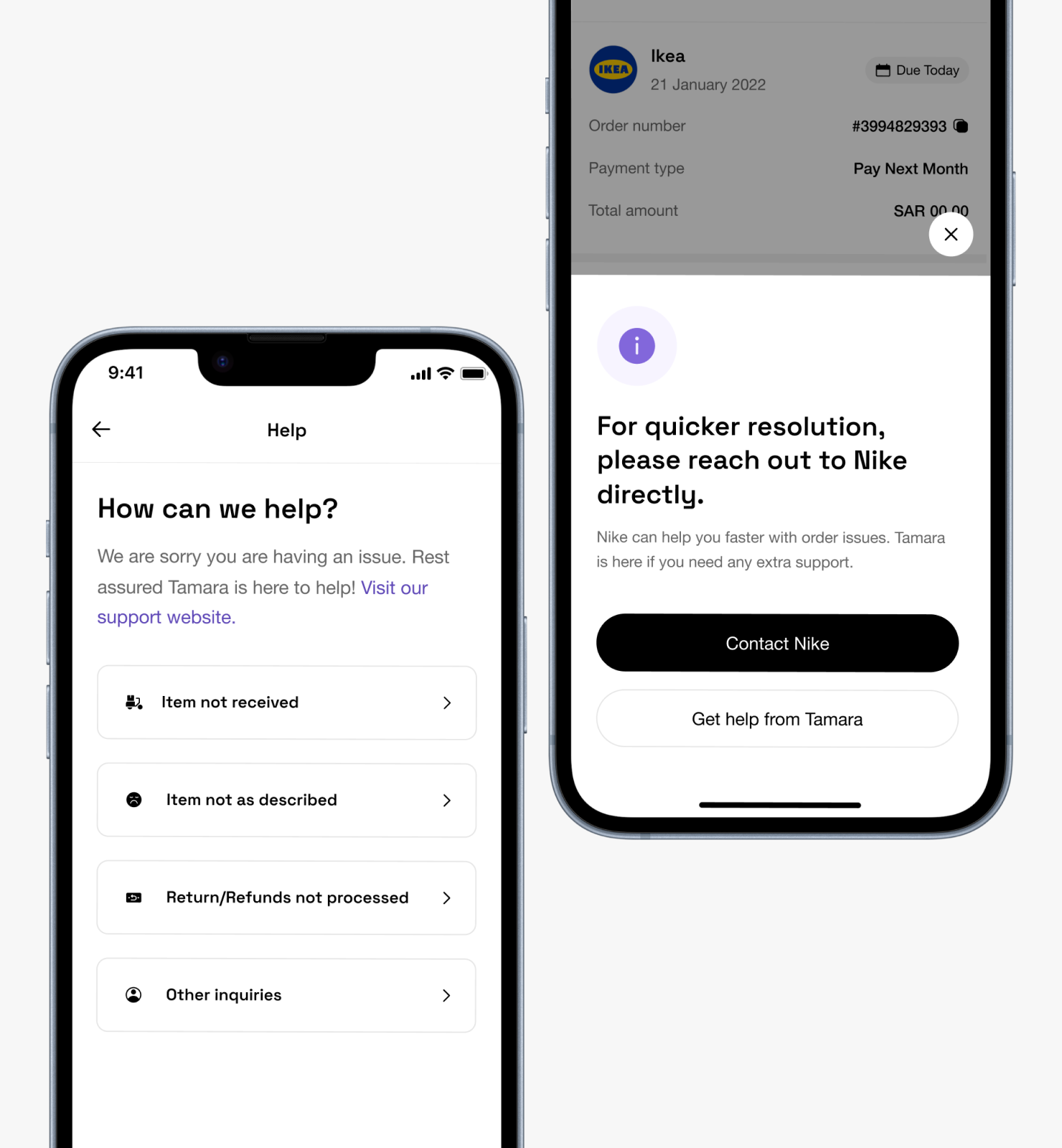
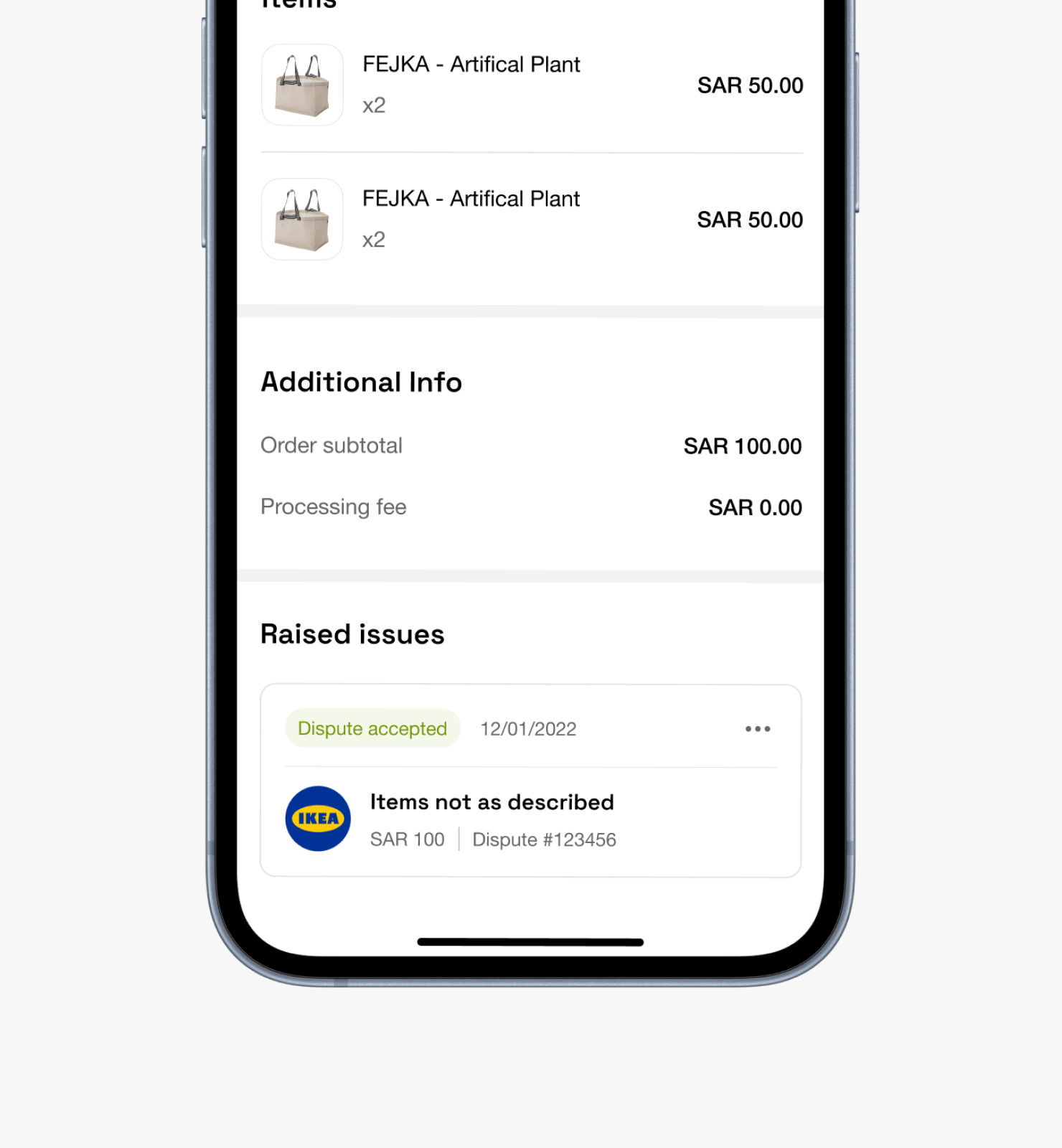
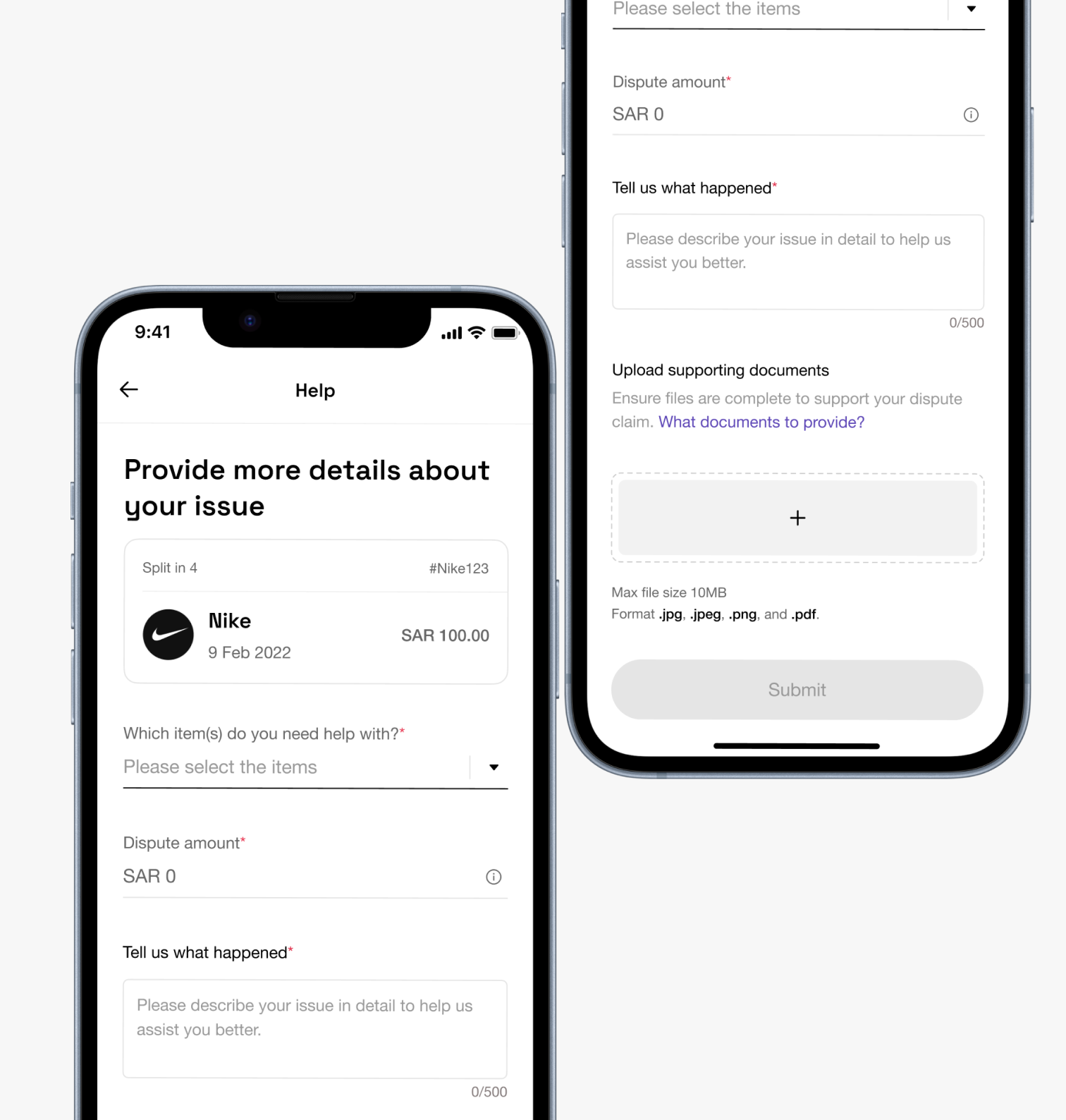
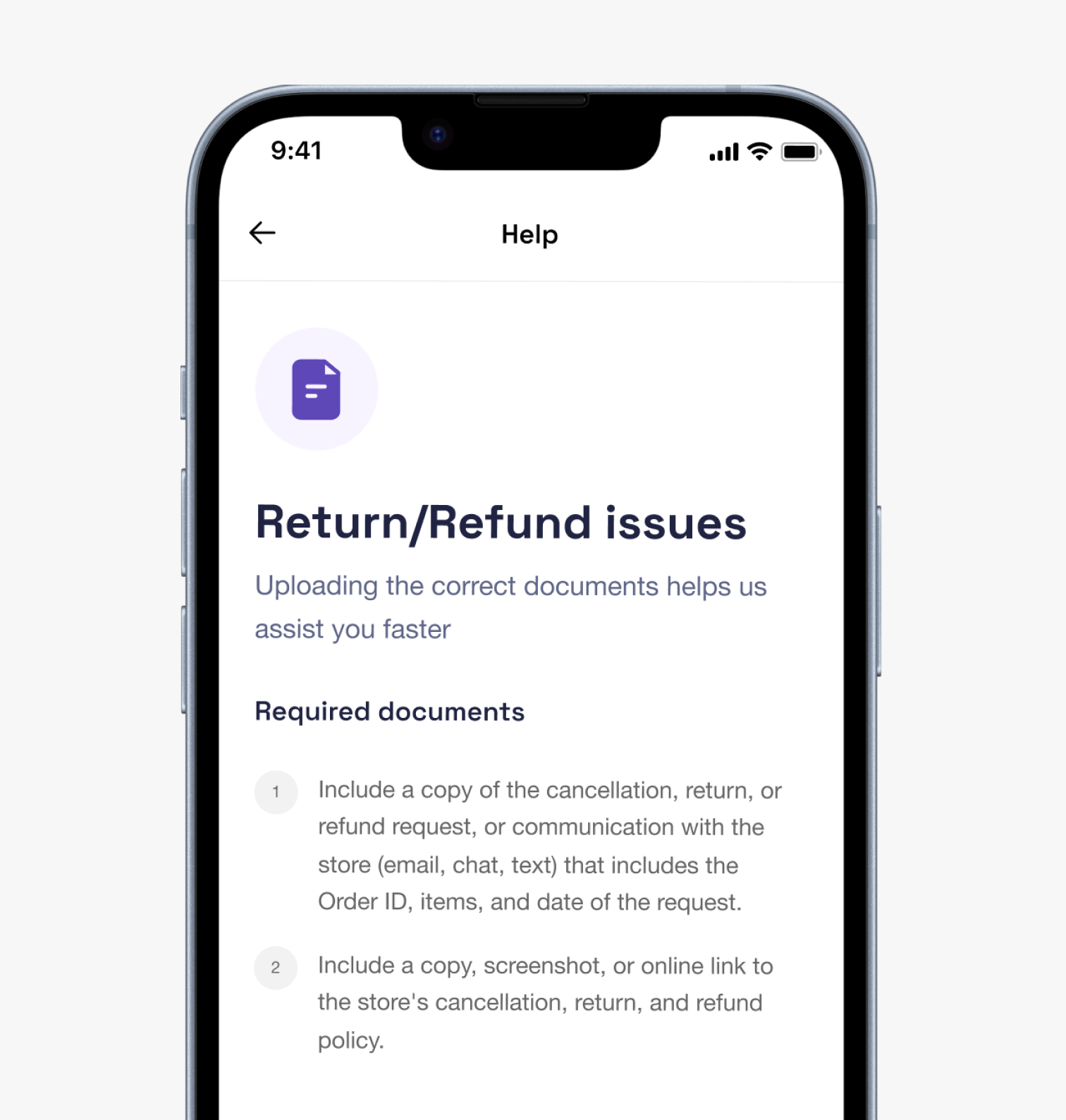
The buyer protection flow, from start to finish
How a user raises a dispute in the app, from choosing what went wrong to tracking the outcome.
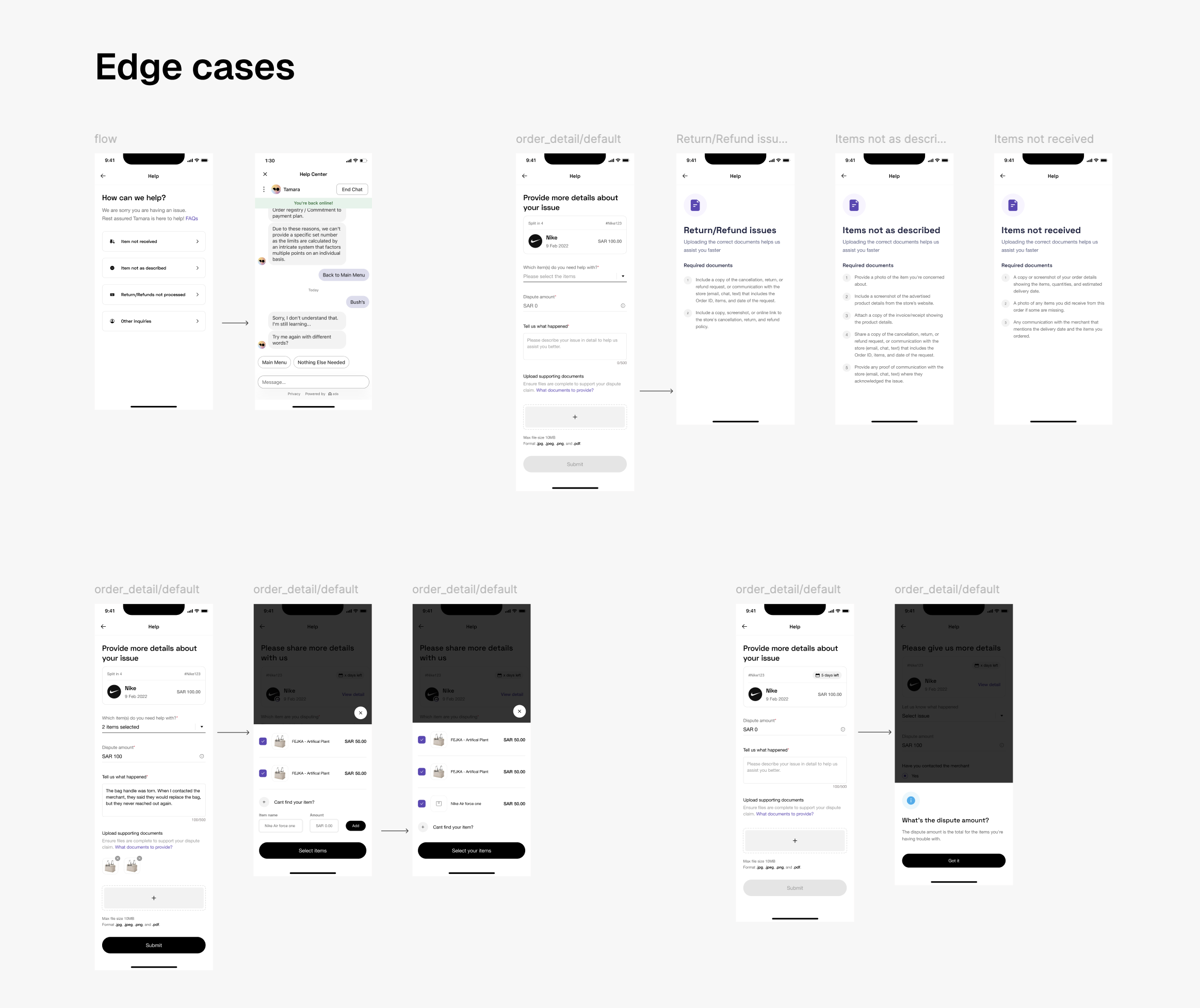
Designing beyond the happy path
I designed and documented the edge cases across the flow for developer handoff.
After launching the in-app dispute flow, we reduced user contact rates regarding disputes by 90%. Almost all disputes are raised through the app.