Tamara Help Center
How do we serve both customers and merchants from one help center?
I redesigned Tamara's help center to serve both customers and merchants, two audiences with fundamentally different support needs, while reducing the friction that was pushing users to contact support instead of self-serving.
As a BNPL platform, Tamara serves both merchants and customers, requiring tailored communication channels to meet their unique needs. However, the current emphasis of Tamara's help center on customers presents challenges for merchants in accessing necessary support. Given Tamara's role in managing customers' finances, ensuring their security and support is paramount. This project aims to rectify these issues by streamlining access to support for Tamara users and eliminating barriers to help.
Customers were overwhelmed, and merchants had no path at all.
When customers visited the help center, they were overwhelmed by excessive content and unclear navigation. Merchants had it worse — the entire help center was built around customers, leaving merchants without a proper support path. Both issues were directly contributing to high contact rates.
A templated content system with dedicated pathways for each audience.
I restructured the help center with a templated content system and dedicated merchant vs. customer pathways, making it easier for both audiences to find what they need and reducing the need to contact support.
Design Process

Ideation Phase
During the ideation phase I focused on revamping the Help Center to better match our new Tamara branding and reducing the unnecessary information to allow users to quickly identify what they are hoping to resolve.
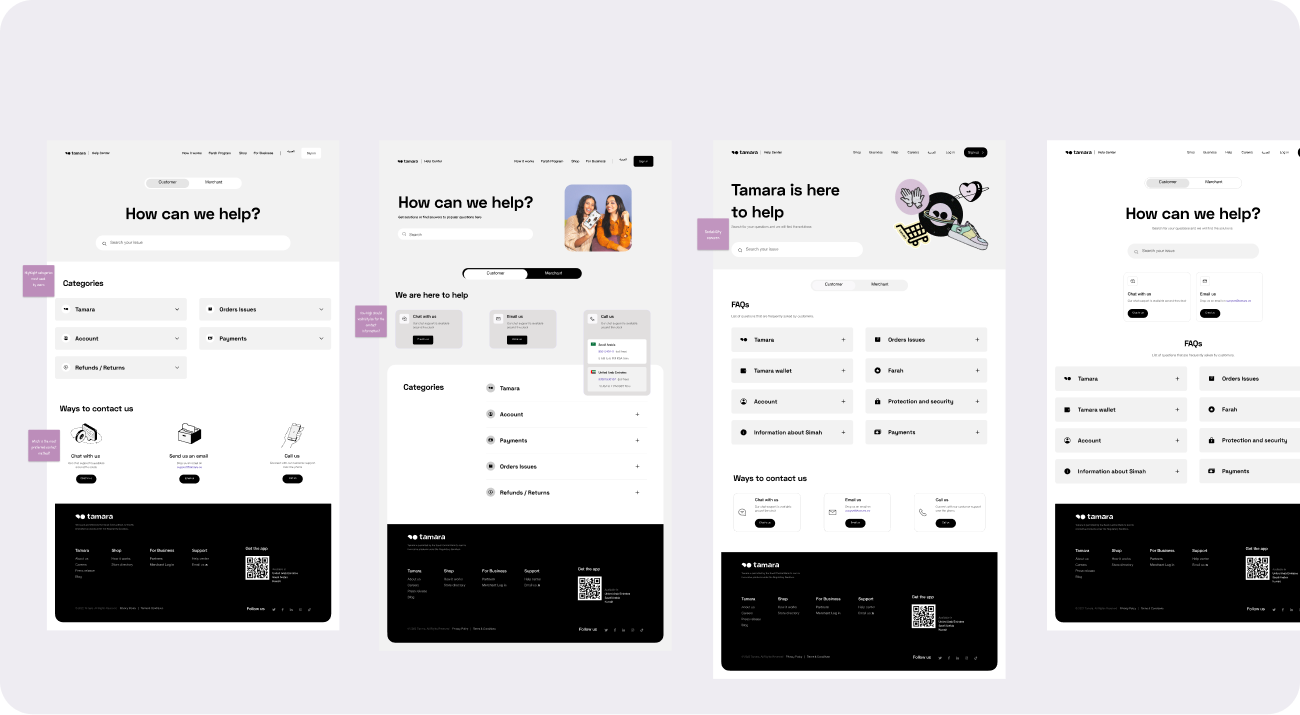
Key learnings in this phase:
- Design solution should balance resolving users' pain points while keeping in mind stakeholder concern regarding high contact rates.
- Testing the structure of the design when articles are added and removed, making sure that the design structure can adapt to all the changes.
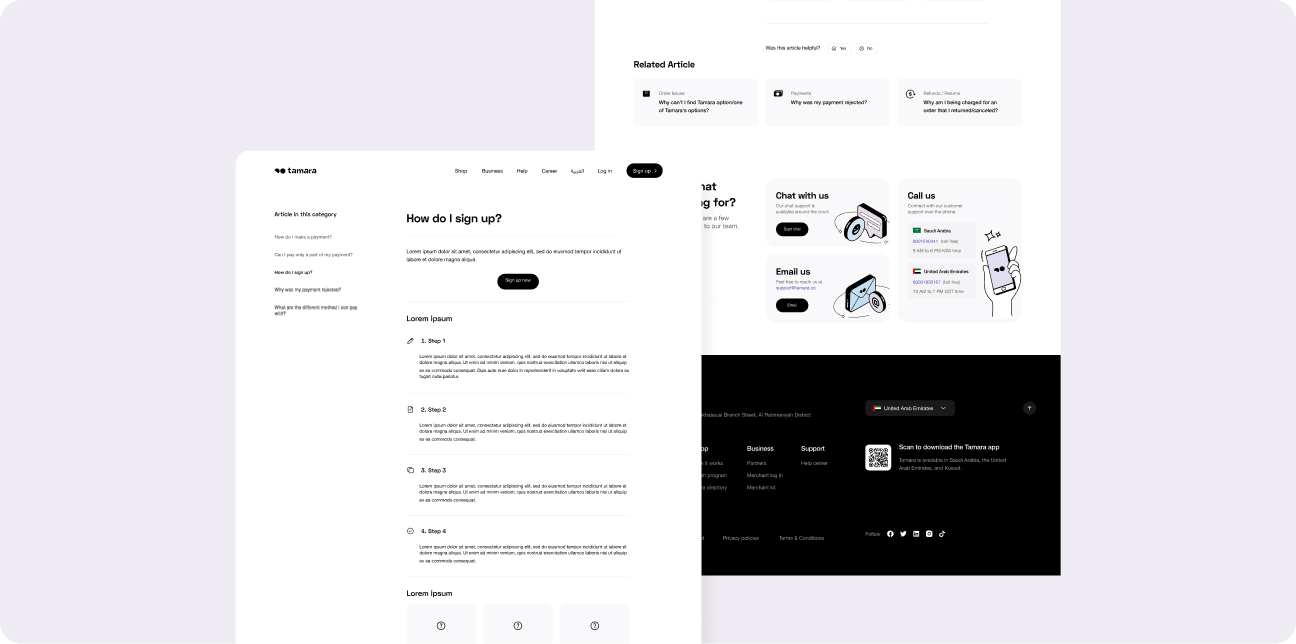
Template Structure
In this phase, I focused on designing templates that can be used in the article pages of the help center. The design needed to be adaptable to both merchant and customer articles.
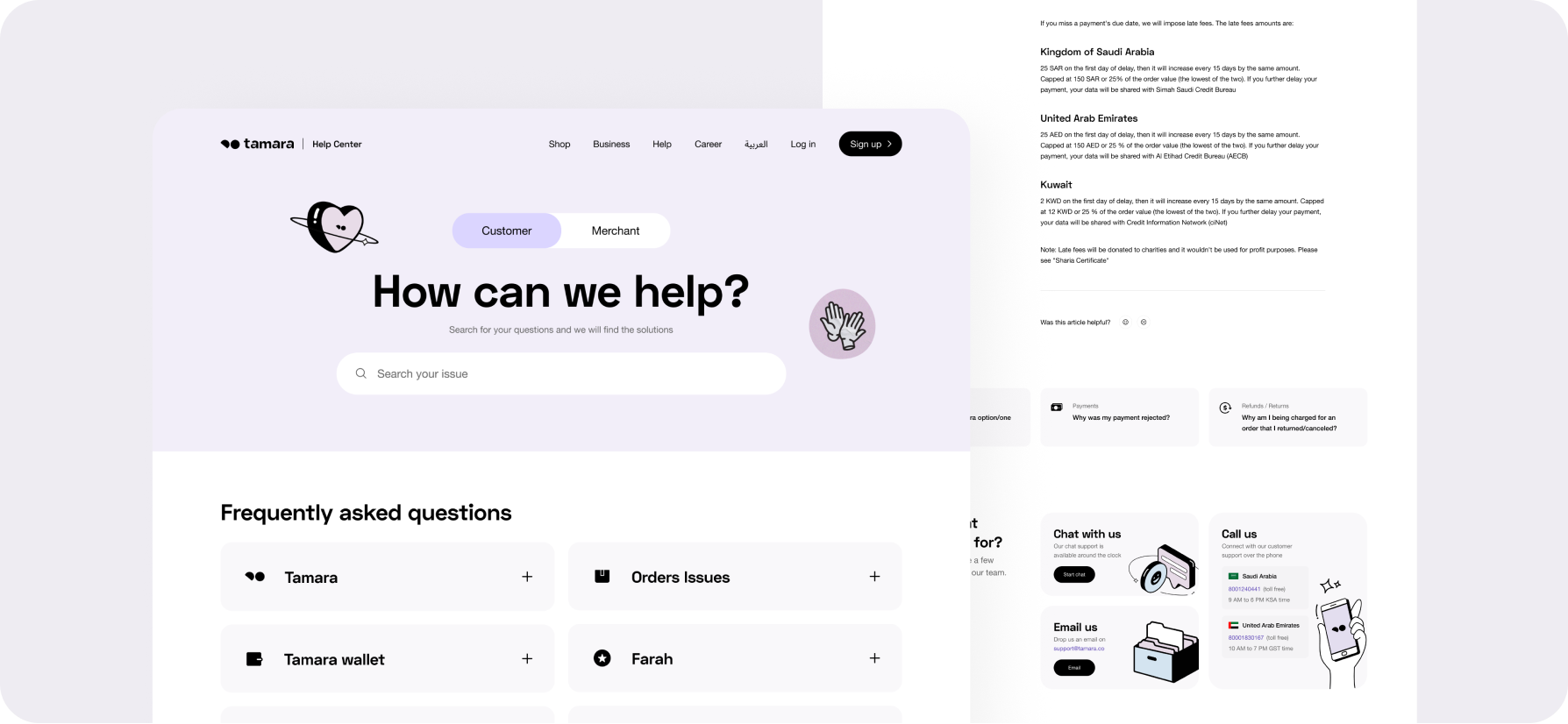
High-Fidelity Designs
After iterating on wireframes, high-fidelity designs were created after implementing stakeholders' feedback. Some of the UI components were custom-designed for Tamara's help center.
Challenges and Lessons
- After design completion, the development was to be done on a 3rd party platform, which limited some of its intended functionality. Working closely with the PM and the developers, we managed to finalize solutions and alternative fixes. Moving forward, understanding how a design will be developed would be very important.
- When building interactions, knowing your users' tech-savviness greatly impacts how you design.